





Identification
and Molecular Analysis of Novel Mushroom Varieties of MDI Using ITS Sequencing
and Phylogenetic Tools
Akther Jahan Kakon, Md. Bazlul Karim
Choudhury[1],
Raihan Ferdous and Abu Noman Faraque Ahmed2
Mushroom
Development Institute, Sobhanbag, Savar, Dhaka,
Bangladesh
Abstract
This study aimed to molecularly characterize and identify newly
introduced mushroom varieties preserved at the Mushroom Development Institute
(MDI), Bangladesh. Five varieties—Pleurotus ostreatus (BPO), Pholiota
adiposa (PA), Flammulina filiformis (Fv-C), Psilocybe cubensis
(PC), and Hypsizygus marmoreus (HT-C)—were selected for genetic
analysis. Genomic DNA was extracted and amplified using ITS4 and ITS5 primers
targeting the internal transcribed spacer (ITS) region of nuclear rDNA. PCR
products ranged from 602 to 672 bp and were sequenced using the Sanger method.
BLASTn analysis confirmed species identity, with sequence similarities ranging
from 93.99% to 99.85% compared to GenBank references. Evolutionary divergence
among the isolates was estimated using the Tamura-Nei model, revealing the
lowest divergence (0.024) between PA and HT-C, and the highest (0.941) between
PA and PC. A phylogenetic tree constructed via the Maximum Likelihood method
clearly grouped isolates into distinct clades with high bootstrap support,
validating molecular identification. This ITS-based profiling confirms the
genetic distinctiveness of these mushroom varieties and supports their conservation
and future breeding potential at MDI.
Keywords:
Pleurotus ostreatus, Pholiota adiposa, Psilocybe cubensis,
Molecular identification, Mushroom germplasm.
INTRODUCTION
Mushrooms are globally recognized for their nutritional,
medicinal, and ecological importance. Among the thousands of known fungal
species, several edible and medicinal mushrooms have gained widespread
popularity due to their high protein content, low fat, and presence of
bioactive compounds (Chang and Wasser, 2017). In particular, genera such as Pleurotus,
Pholiota, Flammulina, Psilocybe, and Hypsizygus are well-studied for
their commercial cultivation, therapeutic potential, and genetic diversity
(Valverde et al., 2015; Lindequist et al., 2005).
In Bangladesh, mushroom cultivation has seen significant
growth over the past two decades, particularly among small-scale farmers and
rural entrepreneurs. This expansion is supported by favorable climatic
conditions, increased public awareness, and governmental initiatives aimed at
improving nutrition and income generation. The Mushroom Development Institute
(MDI), the country’s principal research and development center for mushrooms
under the Department of Agricultural Extension (DAE), plays a crucial role in
strain development, extension services, and the dissemination of cultivation
technologies. MDI maintains a collection of both local and exotic mushroom
germplasm, with a strong focus on species adaptation, yield improvement, and
conservation.
Despite the increased popularity of mushroom cultivation in
Bangladesh, systematic molecular characterization of the available strains
remains limited. Traditional methods of morphological and phenotypic
identification are often insufficient for distinguishing between closely
related strains or identifying cryptic diversity. Therefore, molecular
profiling techniques offer a more reliable and reproducible approach to assess
genetic variation, identify novel or elite germplasm, and inform breeding and
conservation strategies.
The Internal Transcribed Spacer (ITS) region of ribosomal
DNA has been widely adopted as a universal DNA barcode for fungi due to its
high interspecific variability and ease of amplification (Schoch et al.,
2012). Phylogenetic analysis based on ITS sequences enables researchers to
resolve evolutionary relationships among mushroom strains and supports accurate
taxonomic identification. This study aims to conduct a molecular profiling of
selected mushrooms varieties preserved at the Mushroom Development Institute
(MDI).
MATERIALS
AND METHODS
The experiment was conducted at Mushroom Development
Institute, Sobhanbag, Savar, Dhaka, Bangladesh in 2024. In this experiment,
newly introduced mushroom varieties BPO (Pleurotus ostreatus), PA (Pholiota
adiposa), Fc-V (Flammulina filiformis), PC (Psilocybe cubensis),
and HT-C (Hypsizygus marmoreus) were selected and grown at the Mushroom
Development Institute’s culture house. DNA isolation, fingerprint, and genetic
chromatography were examined in the Invent Technology.
Molecular
Identification
DNA extraction and
purification: Genomic
DNA was extracted from the selected mushrooms fruiting bodies using the
Maxwell® Blood DNA Extraction Kit (Model AS1010, Promega Corp., Madison, WI,
USA) according to the manufacturer’s protocol. The extracted DNA was purified
using the Wizard® Genomic DNA Purification Kit (A1120, Promega Corp.). DNA
concentration and purity were assessed using a NanoDrop 2000c Spectrophotometer
(Thermo Scientific), with a final concentration measured at 40.9 ng/µL.
PCR amplification
of ITS region: The
Internal Transcribed Spacer (ITS) region of the nuclear ribosomal DNA (rDNA)
was amplified using the primer pair ITS5 (5′-GGAAGTAAAAGTCGTAACAAGG-3′) and
ITS4 (5′-TCCTCCGCTTATTGATATGC-3′). PCR reactions were carried out in a 25 µL
total volume using the GoTaq® Green Master Mix Kit (M7122, Promega Corp.) at a
1× final concentration. Each reaction contained 5 µM of each primer and 25 ng
of template DNA. Amplification was performed in a C1000 Touch Thermal Cycler
(Bio-Rad®, Germany) using the following thermal profile (Fig. 1).

Fig. 1. The flowchart of the PCR
protocol performed to amplify the DNA of different mushroom varieties.
Gel electrophoresis
and purification: PCR
products were separated by electrophoresis on a 2% agarose gel at 80 V for 40
minutes and visualized under UV light using SYBR® Gold stain (Invitrogen,
Carlsbad, CA, USA). Amplicons of approximately 700 base pairs were selected and
purified using ExoSAP-IT® (N/P 78200, USB Affymetrix, Inc., Cleveland, OH, USA)
to remove excess primers and dNTPs.
DNA sequencing: Sequencing was performed using the
ABI PRISM® BigDye® Terminator v3.1 Cycle Sequencing Kit (P/N 4336917, Applied
Biosystems, Foster City, CA, USA) with both ITS5 and ITS4 primers. Sequence
reactions were analyzed on an ABI 3130 Genetic Analyzer (Applied Biosystems®
HITACHI, Tokyo, Japan). Raw sequences were assembled and edited using SeqMan v8
(DNASTAR®, Madison, WI, USA). The resulting Sanger sequences were processed
using Chromas 2.6. software to generate a FASTA file containing the partial
sequence. Species identification was performed by comparing the
assembled ITS sequences against the GenBank database using BLASTn. The species
was determined based on the highest identity match.
Sequence analysis: The FASTA files of all the obtained
sequences were analyzed through nucleotide BLAST by submitting the sequences in
the NCBI database (https://blast.ncbi.nlm.nih.gov/Blast.cgi) to match with
existing sequences in the GenBank and obtained accession numbers. The estimation
of evolutionary divergence between sequences was analyzed using the Tamura-Nei
model. After that, the evolutionary history was inferred using the Maximum
Likelihood method and the Tamura-Nei model (Tamura and Nei, 1993). The
bootstrap consensus tree inferred from 1000 replicates was constructed to
represent the evolutionary history of the taxa analyzed (Felsenstein, 1985).
Initial tree(s) for the heuristic search were obtained automatically by
applying Neighbor-Join and BioNJ algorithms to a matrix of pairwise distances
estimated using the Tamura-Nei model and then selecting the topology with
superior log likelihood value. This analysis involved 5 nucleotide sequences.
Codon positions included were 1st+ 2nd+ 3rd+ Noncoding. All ambiguous positions
were removed for each sequence pair (pairwise deletion option). Evolutionary
analyses were performed in MEGA11 software (Tamura et. al., 2021).
RESULTS
AND DISCUSSION
Molecular
Identification of Different Mushroom Varieties
A molecular approach was performed and different mushroom varieties were
identified at the MDI. A total of five different mushroom varieties were
identified which are shown in (Table 1).
Table 1. Identification of newly introduced different mushroom
varieties by molecular analysis at Mushroom Development Institute
|
Sl.
No. |
Name of the mushroom |
Scientific name |
Variety name |
|
1. |
Shimeji/ Beech mushroom |
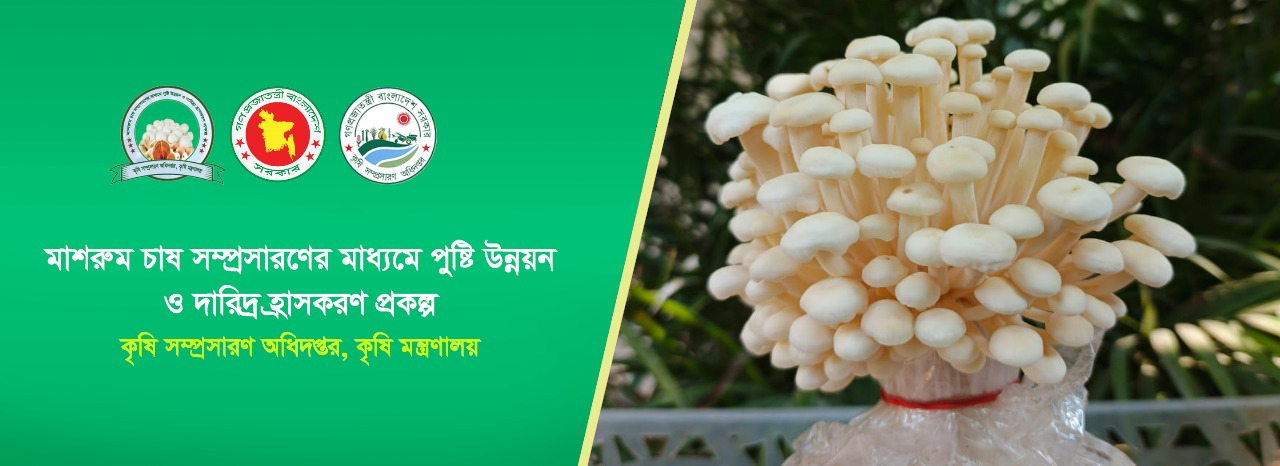
Hypsizygus marmoreus |
HT-C |
|
2. |
Black pearl oyster mushroom |
Pleurotus
ostreatus |
BPO |
|
3. |
Magic/ Shroom/ Golden halo mushroom |
Psilocybe
cubensis |
PC |
|
4. |
Chestnut mushroom |
Pholiota adiposa |
PA |
|
5. |
Enoki mushroom |
Flammulina
filiformis |
Fv-C |
Study
on PCR products
The Gel-Doc system visualized PCR products of mushroom isolates generated by ITS4 and ITS5 primers, which resulted in the DNA bands typically ranging between 500-750 base pairs (bp). Variability in amplicon sizes ranging from 602 (isolate Fv-C) to 672 (isolate PC) bp was observed in the GenBank database. The generated DNA bands indicated the successful PCR amplification, which were extremely similar in size to the target band. The size of the amplified DNA fragment was verified using a Bench Top 1 kb DNA ladder, which acts as a size marker. Fig. 2 shows the successful amplification of DNA bands obtained from several mushroom isolates. These confirm the specificity and successful amplification of the desired DNA fragments under the utilized primer and PCR conditions, as demonstrated by the Gel-Doc system.


Fig. 2. PCR
amplified products of mushroom obtained from the isolates BPO, HT-C, PC, PA,
and Fv-C. M: denotes 1kb DNA ladder (Marker).
Analysis
of DNA Sequences
The obtained FASTA sequences were analyzed using the BLAST tool on the
NCBI website. These sequences were found to match existing nucleotide sequences
in the NCBI GenBank database. All the sequences exceeded 94% (93.99-99.85%)
homology with their corresponding sequence. Subsequently, unique accession
numbers were assigned to the partial sequences for five mushroom isolates
(Table 2).
Table 2. Results of the mushroom’s gene identification
with the BLAST Program

Estimation of Evolutionary Divergence Between
Sequences
Estimates of evolutionary divergence between the ITS sequences of the
five mushroom isolates revealed a range of genetic distances, indicating
varying degrees of relatedness among the isolates. The lowest divergence (0.024
substitutions/site) was observed between Pholiota adiposa (PA) and Hypsizygus
marmoreus (HT-C), suggesting a close evolutionary relationship. Similarly, Pleurotus
ostreatus (BPO) and Flammulina filiformis (Fv-C) exhibited low
divergence (0.034), indicating moderate genetic similarity.
In contrast, the highest divergence (0.941) was found between Pholiota
adiposa (PA) and Psilocybe cubensis (PC), followed by PC and HT-C
(0.861), implying substantial evolutionary separation. Notably, Psilocybe
cubensis consistently showed higher divergence values with all other
isolates, indicating it is the most genetically distinct among the sampled
species (Table 3).
These findings underscore the molecular variability among the examined
mushroom strains and support the effectiveness of ITS-based profiling in fungal
species discrimination and germplasm differentiation.
Table 3. Pairwise evolutionary distances
among the different mushroom isolates based on ITS sequences
|
|
Isolate BPO |
Isolate PA |
Isolate Fv-C |
Isolate PC |
Isolate HT-C |
|
Isolate BPO |
|
0.067 |
0.077 |
0.034 |
0.068 |
|
Isolate PA |
0.756 |
|
0.033 |
0.091 |
0.024 |
|
Isolate Fv-C |
0.746 |
0.336 |
|
0.084 |
0.031 |
|
Isolate PC |
0.391 |
0.941 |
0.818 |
|
0.075 |
|
Isolate HT-C |
0.741 |
0.234 |
0.310 |
0.861 |
|
Here, Values below the diagonal represent base substitutions per site;
values above the diagonal represent standard error estimates obtained by 1000
bootstrap replicates under the Tamura-Nei model.
Analysis
of Phylogenetic Tree

Fig. 3. Phylogenetic
tree of the selected mushroom isolates and reference strains, constructed using
the Maximum Likelihood method. Bootstrap values from 1,000 replicates are
shown. Asterisks (*) indicate newly introduced isolates from the Mushroom
Development Institute (MDI). The scale bar represents substitutions per site.
A phylogenetic tree was constructed using ITS region sequences from
selected mushroom isolates to evaluate their evolutionary relationships. The
analysis included newly characterized strains—marked with an asterisk
(*)—alongside reference sequences retrieved from GenBank (Fig. 3). A total of
1,065 aligned nucleotide positions were used in the final dataset. Phylogenetic
reconstruction was performed using the Maximum Likelihood method, and the highest
log likelihood score was -4413.79, indicating a reliable tree topology.
The phylogenetic tree grouped the mushroom isolates into distinct clades
corresponding to their respective genera. The Pleurotus ostreatus
isolate BPO (PV643226.1*) clustered closely with the reference strain NBRC
33211 (AB733144.1), supported by a strong bootstrap value of 100 and a minimal
evolutionary distance of 0.008. Similarly, the Psilocybe cubensis
isolate PC (PV643234.1*) was found to be nearly identical to its GenBank
counterpart (OR052554.1), indicating genetic consistency.
The Flammulina filiformis isolate Fv-C (PV643233.1*) formed a
distinct clade with its reference strain JIN2 (MH469705.1), while the Pholiota
adiposa isolate PA (PV643232.1*) clustered tightly with the ET37 strain
(MN209721.1), showing minimal divergence (0.008). Notably, the Hypsizygus
marmoreus isolate HT-C (PV643235.1*) grouped strongly with isolate 3
(MN893870.1) with a bootstrap value of 100 and zero genetic distance,
confirming strain-level similarity.
Overall, the phylogenetic tree clearly distinguished species and
validated the molecular identities of the newly introduced isolates at the
Mushroom Development Institute. The close alignment with GenBank references
supports the accuracy of ITS sequencing for mushroom identification and
germplasm conservation.
CONCLUSION
The molecular characterization of five newly introduced mushroom
varieties at the Mushroom Development Institute (MDI) confirmed their taxonomic
identities and genetic relationships using ITS region sequencing. The study
successfully amplified and sequenced the ITS regions, with high sequence
similarity to GenBank references, validating species-level identification.
Evolutionary divergence and phylogenetic analyses revealed both close and
distant genetic relationships among the isolates, highlighting their diversity.
These findings underscore the reliability of ITS-based molecular profiling for
fungal identification and provide a valuable foundation for germplasm
conservation, breeding, and future genetic improvement programs at MDI.
REFERENCES
Chang,
S. T., & Wasser, S. P. 2017. The cultivation and environmental impact of
mushrooms. Oxford Research Encyclopedia of Environmental Science.
Retrieved
17 May. 2025, from https://doi.org/10.1093/acrefore/9780199389414.013.231
Felsenstein,
J. 1985. Confidence limits on phylogenies: An approach using the bootstrap. Evolution.
39: 783–791.
Lindequist,
U., Niedermeyer, T. H., & Jülich, W. D. 2005. The pharmacological potential
of mushrooms. Evid Based Complement Alternat Med. 2(3): 285-299.
Schoch,
C. L., Seifert, K.A., Huhndorf, A. and Schindel, D. 2012. Nuclear ribosomal
internal transcribed spacer (ITS) region as a universal DNA barcode marker for
Fungi. Proceedings of the National Academy of Sciences. 109(16):
6241–6246.
Tamura,
K., Stecher, G., & Kumar, S. 2021. MEGA 11: Molecular Evolutionary Genetics
Analysis Version 11. Molecular Biology and Evolution. 38(7):
3022–3027.
Tamura,
K., & Nei, M. 1993. Estimation of the number of nucleotide substitutions in
the control region of mitochondrial DNA in humans and chimpanzees. Molecular
Biology and Evolution. 10: 512–526.
Valverde,
M. E., Hernández-Pérez, T., & Paredes-López, O. 2015. Edible mushrooms:
improving human health and promoting quality life. Int J Microbiol. 2015:376387.
[1]Department of Biochemistry,
Manikganj Medical College, Manikganj, Bangladesh. 2Department of
Plant Pathology, Sher-e-Bangla Agricultural University, Dhaka, Bangladesh.